
A Child's Chernobyl
Voices from ChernobylThis flow follows children whose everyday life is shaped by illness, social exclusion, and the awareness that their generation may inherit lasting consequences.
increasing Bearing strength in each event
 decreasing
Bearing strength in each eventdecreasingA Childhood Under Watch
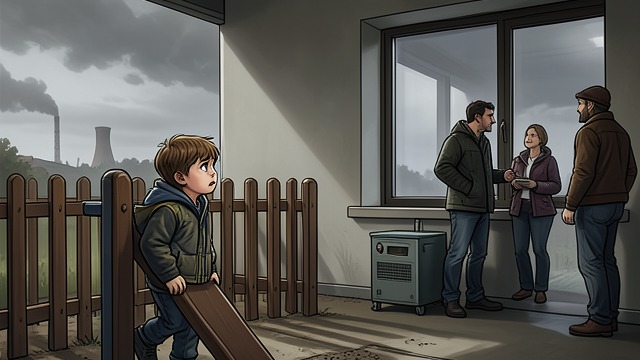
A Childhood Under Watch
School and Exposure
Children were kept indoors or moved between places, while adults argued over what was safe. Their ordinary freedom to play outside became a matter of monitoring and restriction.
A Different Daily World
The landscape remained visible from windows but could no longer be treated as an unqualified playground. Childhood routines absorbed the fear and uncertainty of adults.
The Sickroom Vocabulary
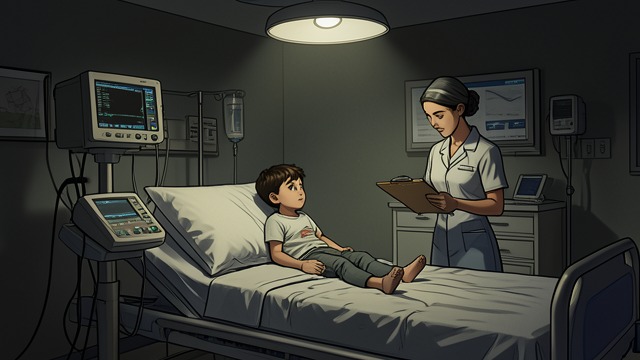
The Sickroom Vocabulary
Children Learn Diagnoses
Some children knew the names of diseases, procedures, and medicines from repeated hospital stays. Their knowledge came not from curiosity but from living inside a medical system.
Adults Hide Their Fear
Parents sometimes cried away from their children and returned with reassurance. This protective performance offered comfort while revealing how illness had reorganized family life.
The Classmate Called Shiny
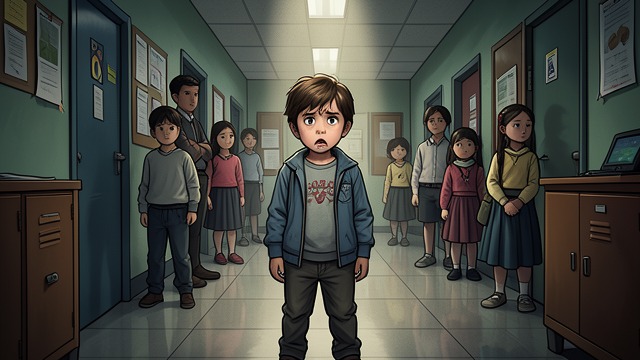
The Classmate Called Shiny
Fear Among Peers
A displaced child was called radioactive and avoided by classmates. The stigma turned an evacuation history into a visible social label.
Childhood Interrupted
The child had to learn that the disaster shaped how other people treated him, even far from the reactor. Resettlement did not protect children from isolation or misunderstanding.
A Friend's Suicide
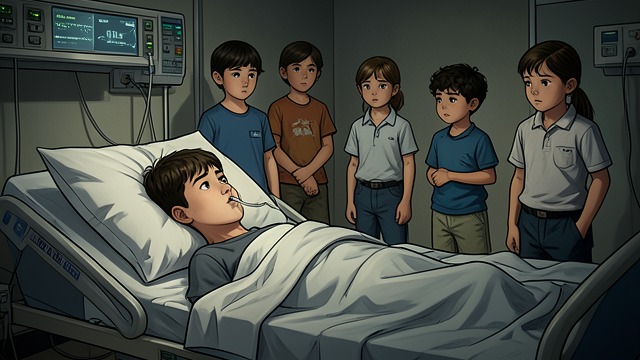
A Friend's Suicide
Illness and Restriction
A boy with serious health problems faced repeated operations and limits on movement. His peers recall a life narrowed by illness and the awareness of mortality.
A Death Among Children
His suicide unsettled classmates who were themselves confronting disease and fear. The children remembered one another not as statistics but as friends whose possible futures had been cut short.
The Future They Imagine
The Future They Imagine
Questions About Birth
Children wondered where they would have existed if they had not been born and whether their generation could have siblings or children. They experienced the future as a question of bodily possibility.
Memory in Their Pictures
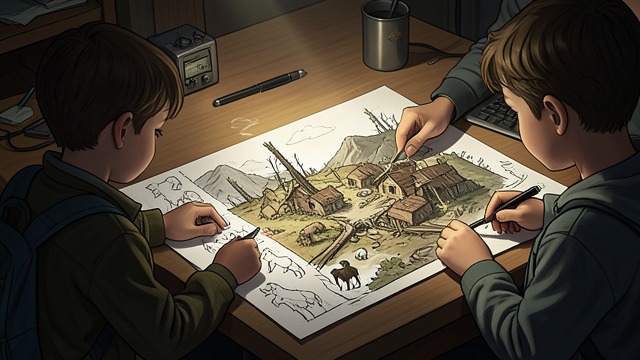
Their drawings and stories made contaminated landscapes, buried villages, and absent animals part of childhood imagination. The disaster became a condition of growing up, not merely a remembered event.
The first years after April 1986
The late 1980s and 1990s
After resettlement from Pripyat
Several years after the accident
The children's interviews in the 1990s
